
BJJ Kimura Training and Drills
A focused, beginner-friendly guide to training the Kimura — grip, control, entries, drilling progression and defense awareness — built around safe, controlled practice rather than shortcuts to a finish.
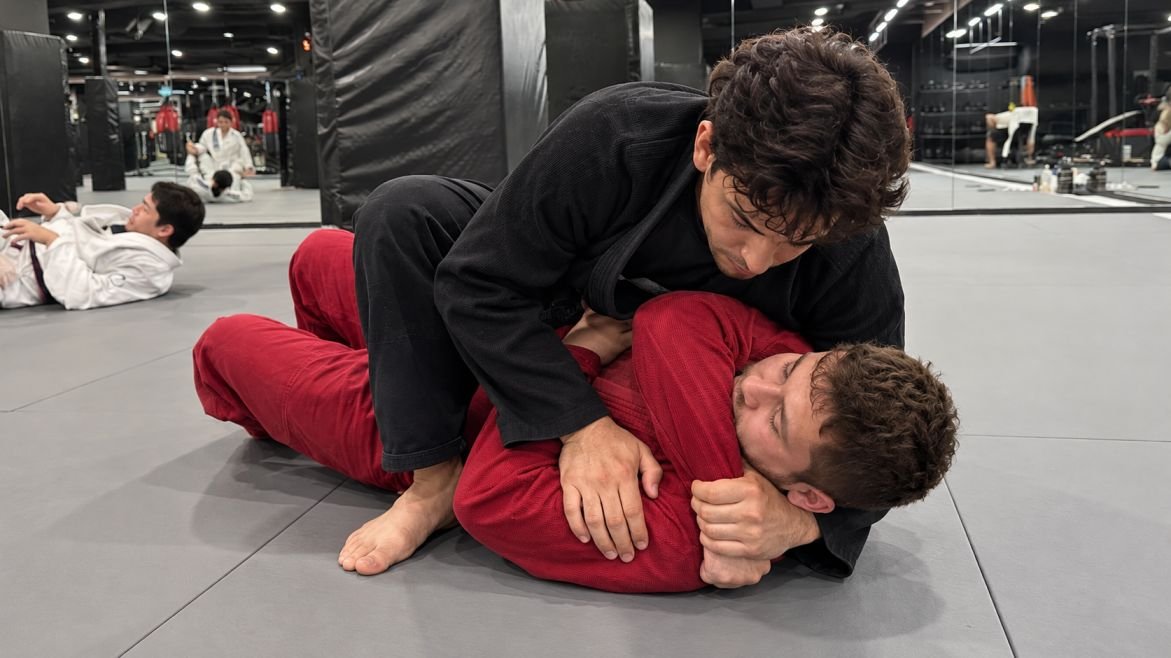
A Kimura is a BJJ submission and control technique that isolates an opponent's arm using a figure-four shoulder-control grip, applied from positions like guard, side control or mount. Kimura training develops arm control, positional awareness, grip skill and transitions — not just the finishing submission itself.
This article covers training concepts, positioning and drilling methodology, not instructions for maximizing pressure. Learn technique details from a qualified instructor. Train slowly and under control, communicate with your partner, tap early, and release immediately the moment your partner taps. Never practice submissions on someone who hasn't consented and isn't trained to tap and communicate.
What Is a Kimura in BJJ?
The Kimura is a shoulder-control submission that isolates one of your opponent's arms using a figure-four grip, restricting shoulder rotation. It's built on a relationship between grip, body positioning and control — the grip alone does very little without the positional control surrounding it.
Because it depends so heavily on position, the Kimura is as useful as a control and transition tool as it is a finishing submission. Understanding it as a system — grip, control, timing, transition — gives a more complete picture than treating it purely as a single move.
Why Train the Kimura?
Kimura training builds submission awareness, arm-control skills, positional control, grip awareness and transition ability. It also creates natural connections to other opportunities — back exposure, guard attacks, side-control attacks and mount attacks can all develop out of Kimura control, and defensive awareness improves as a byproduct of understanding how the position works. None of this guarantees success against a resisting opponent — it builds the underlying skills that make success more likely over time.
Kimura Fundamentals for Beginners
- Position before submission — establishing control matters more than the grip itself
- Controlling the opponent's arm — the core mechanic the whole technique is built on
- Grip fundamentals — correct hand and wrist placement for the figure-four
- Maintaining positional control — the grip means little without control around it
- Hip and body positioning — where your body sits relative to your partner
- Creating angles — positioning off-center rather than square on
- Posture and balance — maintaining your own base throughout
- Timing — recognizing when the position is genuinely available
- Transition awareness — knowing where to go if the Kimura isn't there
- Knowing when to stop — tapping and respecting a partner's tap without exception
Keep early training conceptual and slow — thorough understanding of these ideas matters more at the beginner stage than speed or finishing rate.
Kimura Training Progression
- Learn the position.Understand the body positioning the technique depends on.
- Learn the grip.Correct hand and wrist placement, practiced slowly.
- Learn control.The positional control that surrounds and supports the grip.
- Drill the movement slowly.Cooperative repetition with no resistance.
- Practice entries.Moving into the position from realistic starting points.
- Practice transitions.What to do when the Kimura stalls or isn't available.
- Add controlled resistance.Gradually, once mechanics are sound.
- Add positional sparring.Live but constrained practice focused on the position.
- Develop defensive awareness.Understanding the position from the defender's side too.
- Integrate into broader grappling chains.Connecting Kimura control with your wider game, under instruction.
Best BJJ Kimura Drills for Beginners
Each drill is a training format, not a finishing technique — start every one slowly and under control.
1. Kimura Grip Familiarization Drill
Purpose: build comfort and correct hand placement for the figure-four grip.
- Starting position: seated or kneeling, no partner resistance
- Training objective: correct hand and wrist placement
- Basic movement: slowly form and release the grip shape without pressure
- Suggested reps/time: 8–10 slow repetitions per side
- Beginner modification: practice the grip shape on your own arm first
- Common mistake: gripping too high or too low on the wrist or forearm
- Safety note: grip only, no pressure applied
2. Kimura Control-Position Drill
Purpose: build the positional control that supports the grip.
- Starting position: side control or guard
- Training objective: establishing body position before any submission attempt
- Basic movement: settle into control position and hold briefly, no grip yet
- Suggested reps/time: 5–6 reps, holding a few seconds each
- Beginner modification: partner stays passive throughout
- Common mistake: reaching for the grip before establishing position
- Safety note: control only, no submission pressure
3. Kimura Entry Drill
Purpose: practice recognizing and moving into a genuine entry opportunity.
- Starting position: guard or side control, partner posture changing
- Training objective: timing and entry mechanics together
- Basic movement: move from a neutral position into grip and control as one motion
- Suggested reps/time: 6–8 repetitions per side
- Beginner modification: partner provides a clear, obvious opening
- Common mistake: entering before control is actually established
- Safety note: slow pace, stop before finishing pressure
4. Kimura Grip-Switch Drill
Purpose: practice adjusting grip and hand positioning without losing control.
- Starting position: Kimura grip already established, light hold
- Training objective: comfort adjusting grip mid-position
- Basic movement: release and re-establish grip in a slightly different position
- Suggested reps/time: 5 repetitions per side
- Beginner modification: practice the grip switch in open air first, no partner
- Common mistake: losing arm control while adjusting
- Safety note: keep pressure light throughout
5. Kimura Retention Drill
Purpose: build the ability to maintain the position once established.
- Starting position: Kimura control established, light resistance
- Training objective: retaining position against gentle movement
- Basic movement: partner shifts weight slightly; you adjust to maintain control
- Suggested reps/time: 3–4 rounds of 30–60 seconds
- Beginner modification: partner uses minimal resistance
- Common mistake: gripping harder instead of adjusting position
- Safety note: resistance stays light and controlled throughout
6. Kimura Transition Drill
Purpose: practice moving from a stalled Kimura attempt into another position.
- Starting position: Kimura control, partner defending
- Training objective: recognizing when to transition rather than force the finish
- Basic movement: shift to an alternate control position when the Kimura stalls
- Suggested reps/time: 5–6 repetitions
- Beginner modification: partner signals when to transition
- Common mistake: continuing to force a stalled position
- Safety note: keep every transition smooth and controlled
7. Kimura Movement Drill
Purpose: build the hip and body movement patterns the technique depends on.
- Starting position: any relevant position — guard or side control
- Training objective: coordination between hips, grip and control
- Basic movement: shadow the body movement involved, no partner needed
- Suggested reps/time: 5 minutes
- Beginner modification: break the movement into smaller parts
- Common mistake: moving the arms without moving the hips
- Safety note: solo drill, no partner required
8. Kimura Chain Drill
Purpose: practice connecting a Kimura attempt with a related follow-up option.
- Starting position: Kimura control, partner defending
- Training objective: recognizing conceptual chain opportunities, not forcing a fixed sequence
- Basic movement: move from Kimura control to an alternate position or attack when appropriate
- Suggested reps/time: 4–5 repetitions
- Beginner modification: focus on one simple chain option at a time
- Common mistake: trying to force multiple chains at once
- Safety note: keep pace and pressure controlled throughout
9. Kimura Finishing-Awareness Drill
Purpose: build awareness of tap timing and immediate release.
- Starting position: Kimura control established
- Training objective: recognizing a tap and responding instantly
- Basic movement: partner taps at a pre-agreed cue; you release immediately
- Suggested reps/time: 4–6 repetitions
- Beginner modification: use a verbal "tap" cue instead of a physical tap while learning
- Common mistake: delayed release after a tap
- Safety note: this drill is specifically about tap response, not finishing pressure
Kimura Entries and Common Positions
Kimura opportunities can develop from several common grappling situations — guard (closed or open), half guard, side control, mount, turtle, and various transitional scrambles. In every case, the training objective is the same: recognize a genuine opening, establish control, then decide whether to attempt the grip — not force the position on a schedule.
From Guard
Guard is a common context for Kimura opportunities, usually connected to arm isolation and controlling your partner's posture. Focus on creating the right angle and controlling posture before reaching for the grip — a common beginner error is grabbing for the arm too early, before any real control exists.
From Side Control
From side control, the focus is establishing control first, then recognizing arm-position opportunities as they appear, while maintaining top pressure without using unsafe or excessive force. Treat the Kimura here as part of a broader positional system rather than the only goal from side control.
From Mount
From mount, arm-control concepts apply similarly, with an added emphasis on maintaining the mount position itself — a rushed Kimura attempt that costs you the mount is rarely a good trade. Drill this slowly, prioritizing position retention alongside the attempt.
From Half Guard
Half guard adds positional complexity: arm isolation and balance both matter more here, and transition opportunities toward full control or a Kimura attempt should be drilled as connected movements, not isolated steps.
From Turtle
From turtle, Kimura-related control connects most naturally with broader positional transitions rather than a direct finish — keep this context focused on control and safety awareness rather than forcing a submission from an inherently unstable position.
Kimura Transition Drills
Beyond entries, it's worth training what a Kimura attempt can transition into: positional control, back exposure, another submission opportunity, or simply using the grip as a control mechanism while you reassess. These are conceptual training relationships to build awareness around — not a fixed, guaranteed sequence that plays out the same way every time.
Kimura Chains and Combinations
Kimura control can conceptually connect to other opportunities — a transition to improved position, exposure to the back, or, depending on how a partner reacts, openings toward an armbar or triangle attempt. These are training relationships worth understanding, not guaranteed sequences. Triangle-specific training and drilling is covered in our BJJ triangle training and drills guide; armbar-specific training is its own dedicated topic.
Kimura Defense and Escape Awareness
Understanding the Kimura should include understanding how it's defended. At a beginner level, that means recognizing when your arm is being isolated, protecting your positioning, understanding how the grip restricts you, creating space when appropriate, and maintaining posture. Respond to genuine pressure by tapping — before pain, not after it.
Partner Kimura Drills
Partner drilling should progress through stages: cooperative drilling first, then slow technical repetition, then progressive resistance, then positional sparring. A simple beginner routine: warm up the grip and control positions cooperatively, drill entries slowly, then finish with light control-and-release repetitions — no live resistance yet.
- Communicate clearly before and during drilling
- Tap early, and release immediately the moment your partner taps
- Never continue applying pressure after a tap
- Reset positions calmly between reps
- Use appropriate mats with adequate space
- Learn technique specifics from qualified instruction
Solo Kimura Drills
Solo work can realistically cover grip movement patterns, hip movement, positional movement, arm-control shadow drilling, transition visualization and general movement repetition. For more on what solo practice can realistically achieve, see solo BJJ training.
Solo drills can't reproduce live resistance, grip fighting, timing against a moving opponent, reactions, or positional unpredictability. They supplement live training — they don't replace it.
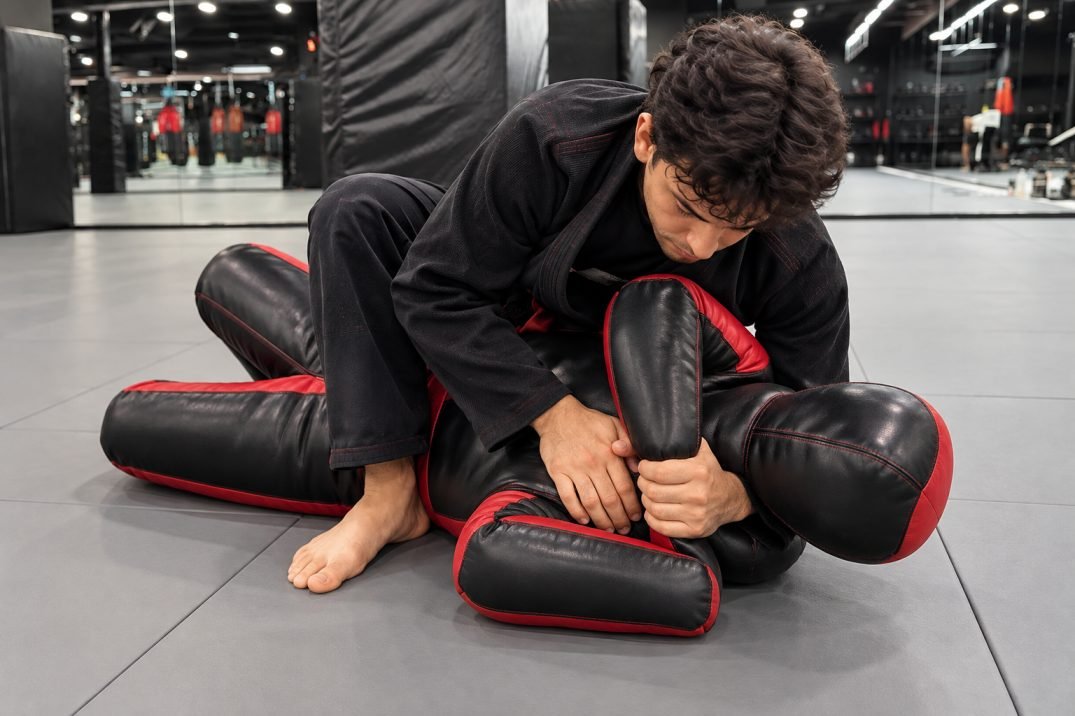
Kimura Drills With a Grappling Dummy
A suitable BJJ grappling dummy can support repeating positioning, practicing grip placement, rehearsing movement patterns, entry repetition, transition practice and general technical familiarity. As with any dummy application, follow the manufacturer's intended use rather than assuming a given product supports this kind of work.
A dummy doesn't reproduce live resistance, reaction, grip fighting, timing, realistic defensive movement, coaching or live rolling. Use it to build technical familiarity between live sessions, not as a stand-in for a training partner.
Comparing Kimura Training Methods
Each method develops a different part of the skill — none replaces the others.
| Training Type | Main Focus | Beginner Friendly? | Equipment | Main Limitation |
|---|---|---|---|---|
| Partner Kimura drilling | Technique repetition with feedback | Yes | Training partner, mats | Limited by partner availability |
| Solo Kimura drilling | Movement and grip familiarity | Yes | None required | No resistance or reactions |
| Grappling dummy drilling | Positional and grip repetition | Yes | Suitable grappling dummy | No live resistance or reactions |
| Positional sparring | Timing and live decision-making | Intermediate | Training partner, mats | Needs some prior technical base |
| Live rolling | Full application under resistance | Advanced-leaning | Training partner, mats, supervision | Needs solid fundamentals and control |
Kimura Training at Home
A home session can reasonably include a warm-up, technical drilling of grip and movement, solo movement work, controlled partner drilling if someone's available, dummy-assisted repetition where appropriate, and a cool-down. It requires appropriate mats, adequate space, safe equipment and a controlled approach — the same safety expectations that apply anywhere else.
30-Minute Kimura Training Session
A supplementary practice session — this does not replace coached BJJ training.
| Activity | Time | Purpose |
|---|---|---|
| Warm-up | 5 min | General mobility and readiness |
| Grip / control practice | 5 min | Reinforce grip and control fundamentals |
| Technical drills | 10 min | Entry, transition and retention drilling |
| Transition / chain drills | 5 min | Practice moving beyond a stalled attempt |
| Review and controlled positional work | 5 min | Reflect and reinforce with light positional practice |
Common Kimura Training Mistakes
| Mistake | Better Approach |
|---|---|
| Focusing only on the submission | Prioritize position and control before the finish |
| Ignoring position | Confirm control before attempting the grip |
| Using excessive force | Rely on positioning and leverage, not strength |
| Poor grip control | Drill grip placement specifically and separately |
| Losing balance | Practice slowly until base holds throughout |
| Chasing the submission | Be willing to transition when it stalls |
| Ignoring defensive reactions | Study defense alongside offense |
| Drilling too fast | Slow down until mechanics are consistent |
| Not practicing transitions | Include transition drilling regularly |
| Never practicing defense | Rotate offense and defense in training |
| Treating a dummy as equivalent to a live partner | Use dummy work for positioning, not simulated resistance |
| Skipping warm-up | Warm up joints and movement before drilling |
| Training on unsafe flooring | Use appropriate grappling mats with adequate space |
| Continuing after a tap | Release immediately, every time, without exception |
| Skipping qualified instruction | Learn technique specifics from a qualified instructor |
How Often Should You Train Kimuras?
There's no single schedule that's correct for everyone. Beginners generally benefit from more frequent, low-intensity technical repetition to build correct mechanics; intermediate practitioners can add resistance and positional sparring at a pace that allows recovery; advanced practitioners typically integrate Kimura work into broader live rolling rather than training it in isolation. Consistency, recovery and technical quality matter more than any specific number of sessions per week.
Kimura Training by Skill Level
| Skill Level | Training Focus | Recommended Drills | Main Goal |
|---|---|---|---|
| Beginner | Position, grip and control | Grip familiarization, control-position, entry drills | Build correct mechanics and safety habits |
| Intermediate | Entries, transitions and resistance | Transition drill, chain drill, positional sparring | Develop timing and live decision-making |
| Advanced | Chains, reactions and positional integration | Live rolling, chain combinations, defensive sparring | Integrate Kimura into broader live grappling |
Kimura Training Equipment
Essential
- Suitable grappling mats
- A gi or no-gi training clothing, as your gym requires
- A training partner for live drilling
- Qualified coaching for technique details
Useful
- A suitable grappling dummy for solo repetition
- A basic timer for drill and session structure
Optional
- General mobility and recovery aids
Expensive equipment isn't necessary to train the Kimura effectively — mats, a partner and consistent practice matter far more than gear.
Kimura vs Other BJJ Submissions
A brief conceptual comparison — this isn't a substitute for dedicated resources on each technique.
| Submission | Primary Control | Typical Position | Relationship to Kimura |
|---|---|---|---|
| Armbar | Arm isolation and hyperextension control | Guard, mount, side control | Often connects from a failed or defended Kimura attempt |
| Triangle | Leg-based head-and-arm control | Guard | Different entry mechanism; sometimes reachable from related positions — see our triangle training guide |
| Americana | Shoulder control via a different arm path and direction | Side control, mount | Frequently confused with the Kimura; different grip and mechanic |
| Rear-naked choke | Neck and collar control | Back control | Targets a different part of the body entirely |
Kimura Training for Gi vs No-Gi
Gi training gives you fabric to grip for additional control points, which can change how the position is established and held. No-Gi removes that fabric, generally requiring more reliance on body control and positioning to compensate. The underlying positional concepts — control before submission, grip mechanics, timing — hold in both formats, even as the specific details of grip and control adapt.
Kimura Training Checklist
- Understand the basic position and control it depends on
- Learn correct grip mechanics
- Learn arm-control concepts
- Practice slowly before adding speed or resistance
- Maintain positional control throughout
- Practice entries from realistic starting positions
- Practice transitions for when the position stalls
- Learn defensive awareness alongside offense
- Drill with a cooperative partner before adding resistance
- Add resistance gradually, only once mechanics are sound
- Use appropriate mats and adequate space
- Tap early, and release immediately after a partner's tap
- Train under qualified instruction
- Combine solo and dummy drilling with live grappling
Optional 30-Day Kimura Progression
One possible structure — not the only correct training schedule.
| Week | Focus |
|---|---|
| Week 1 | Position and grip fundamentals |
| Week 2 | Entries and positional drills |
| Week 3 | Transitions and controlled resistance |
| Week 4 | Chains, positional sparring and review |
Frequently Asked Questions
Direct, self-contained answers — including how this topic relates to nearby BJJ subjects.
What is a Kimura in BJJ?
A shoulder-control submission that isolates an opponent's arm using a figure-four grip, built on a relationship between grip, positioning and control rather than the grip alone.
How do you train a Kimura?
Starting with position and grip fundamentals, then control, slow cooperative drilling, entries, transitions, gradually added resistance, and eventually positional sparring and live rolling under instruction.
What are the best Kimura drills for beginners?
Grip familiarization, control-position, and entry drills are good starting points — all practiced slowly and cooperatively before any resistance is added.
Can you practice Kimuras with a grappling dummy?
A suitable dummy can support grip placement, positioning and movement repetition, but check the manufacturer's intended use, and treat it as a supplement, not a live opponent.
Can you train Kimuras alone?
To a degree — grip movement, hip movement and positional shadow drilling are realistic solo work. Live resistance, grip fighting and timing still require a partner.
What positions can you use a Kimura from?
Most commonly guard, side control, mount, half guard, and turtle, along with various transitional scrambles, depending on how the position develops.
Is the Kimura useful in No-Gi?
Yes — the underlying positional concepts still apply, though grip and control details adapt to the absence of fabric to grip.
What is the difference between a Kimura and an Americana?
Both are shoulder-control submissions, but they use different grips and arm paths — they're frequently confused despite being mechanically distinct.
What is the difference between a Kimura and an armbar?
A Kimura controls the shoulder via a figure-four grip on a bent arm; an armbar isolates and hyperextends a straightened arm. The two often connect from similar positions.
How often should I drill Kimuras?
There's no universal frequency — beginners generally benefit from frequent, low-intensity technical repetition, while more experienced practitioners integrate it into broader live training.
How do you safely practice Kimuras?
Slowly, with clear communication, gradual resistance, immediate release on a tap, and appropriate mats and space — safety depends on how training is conducted, not just the technique.
Is Kimura training suitable for beginners?
Yes, when introduced conceptually and drilled slowly under qualified instruction, with position and control prioritized before finishing.
Can Kimura training improve positional control?
Yes — much of Kimura training is really positional and grip-control training that happens to be organized around one submission.
How is Kimura training different from general submission training?
Submission training covers submissions broadly across BJJ; this guide focuses specifically on the Kimura — its grip, positioning, entries, drills and defense.
How is this different from submission grappling drills generally?
General submission grappling drills cover a wide drill library across many techniques; this page is scoped specifically to Kimura-focused drilling.
How does this relate to BJJ triangle training?
Both are distinct submissions with their own dedicated training pages, though they can connect conceptually from related positions — see our dedicated triangle training guide for that topic.
How does this differ from BJJ dummy drills generally?
General BJJ dummy drills cover a range of positions and techniques on a dummy; this guide covers Kimura-specific dummy practice as one part of a broader curriculum.
Can a grappling dummy replace live partner training for Kimuras?
No. It can support positioning and grip repetition, but it can't provide live resistance, grip fighting, reactions or realistic timing.
What should I focus on first when learning the Kimura?
Position and control fundamentals — grip mechanics and recognizing genuine openings — before focusing on finishing at all.
Do I need a partner to start learning Kimura concepts?
Not for the conceptual and movement side, but live entries, resistance and timing genuinely require training with a partner under instruction.
Related Training Equipment
Equipment supports Kimura training as a supplement to coached instruction and live partner drilling.
Building a home BJJ training setup?
A suitable grappling dummy can support solo grip and positional practice as part of a wider training routine.
This guide provides general training and drilling information about BJJ Kimura concepts and is not a substitute for qualified in-person instruction. Techniques described here are conceptual and positional — always learn technique specifics from a qualified instructor, train under control, communicate with your partner, and stop immediately on a tap. A grappling dummy or solo drilling can support practice but cannot replace live training, coaching or sparring. No training method is injury-proof. Explore more at Home Gym Goals.